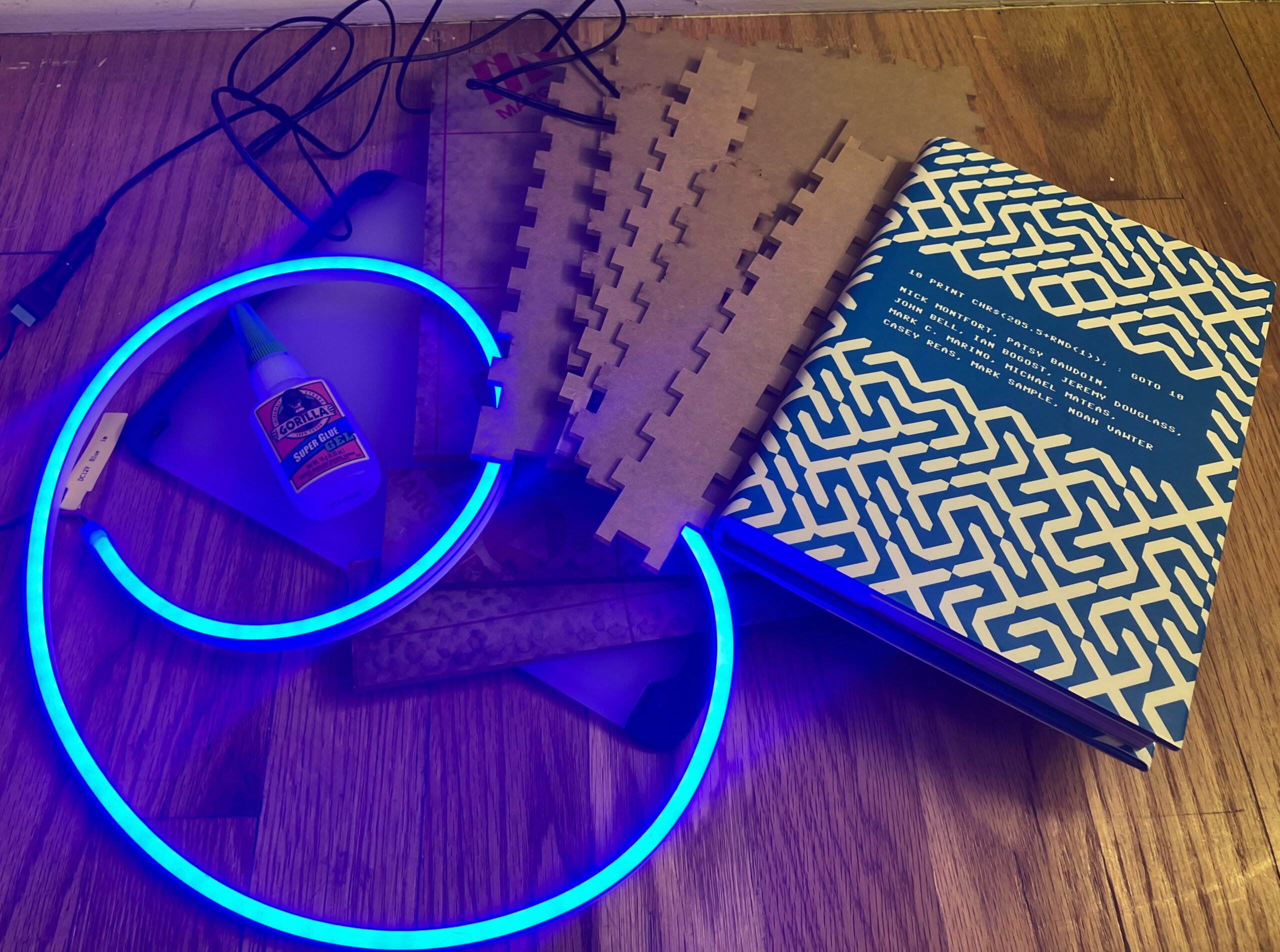
My research imagines and realizes just and joyful research communities at the intersections of technology, information, and culture. I specialize in empowering critical, creative, public, “do-it-yourself” scholarly communication—a wheelhouse connecting textual scholarship and book history, book arts and humanities makerspace practice, and digital humanities theory and building-as-scholarship—with the community design and public leadership activity that ensure these pursuits contribute to communal knowledge and public good.
I shorthand my work as “experimental & digital humanities”, which means I:
- apply technical & creative methods (e.g. coding, book arts, data viz) to explore humanities questions,
- ask humanities questions (e.g. ethical & historical ones) about technologies (digital or not!), and
- advocate for the urgency of library and archival skills informing both directions of inquiry.
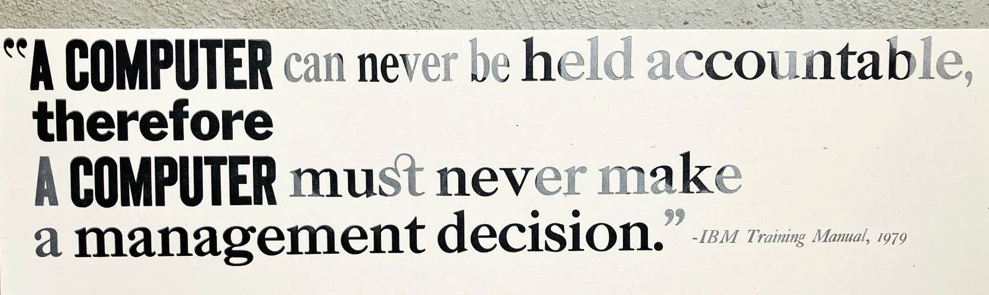
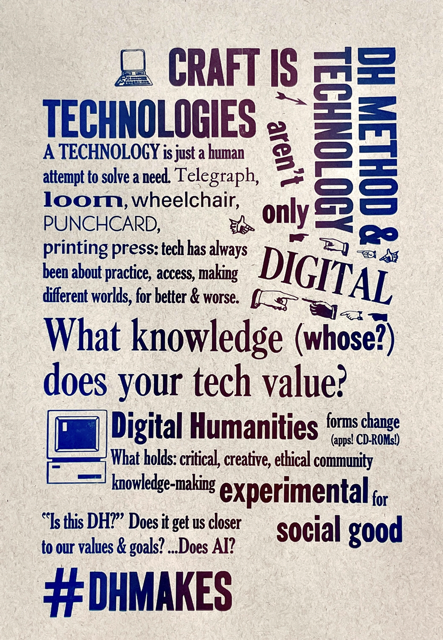
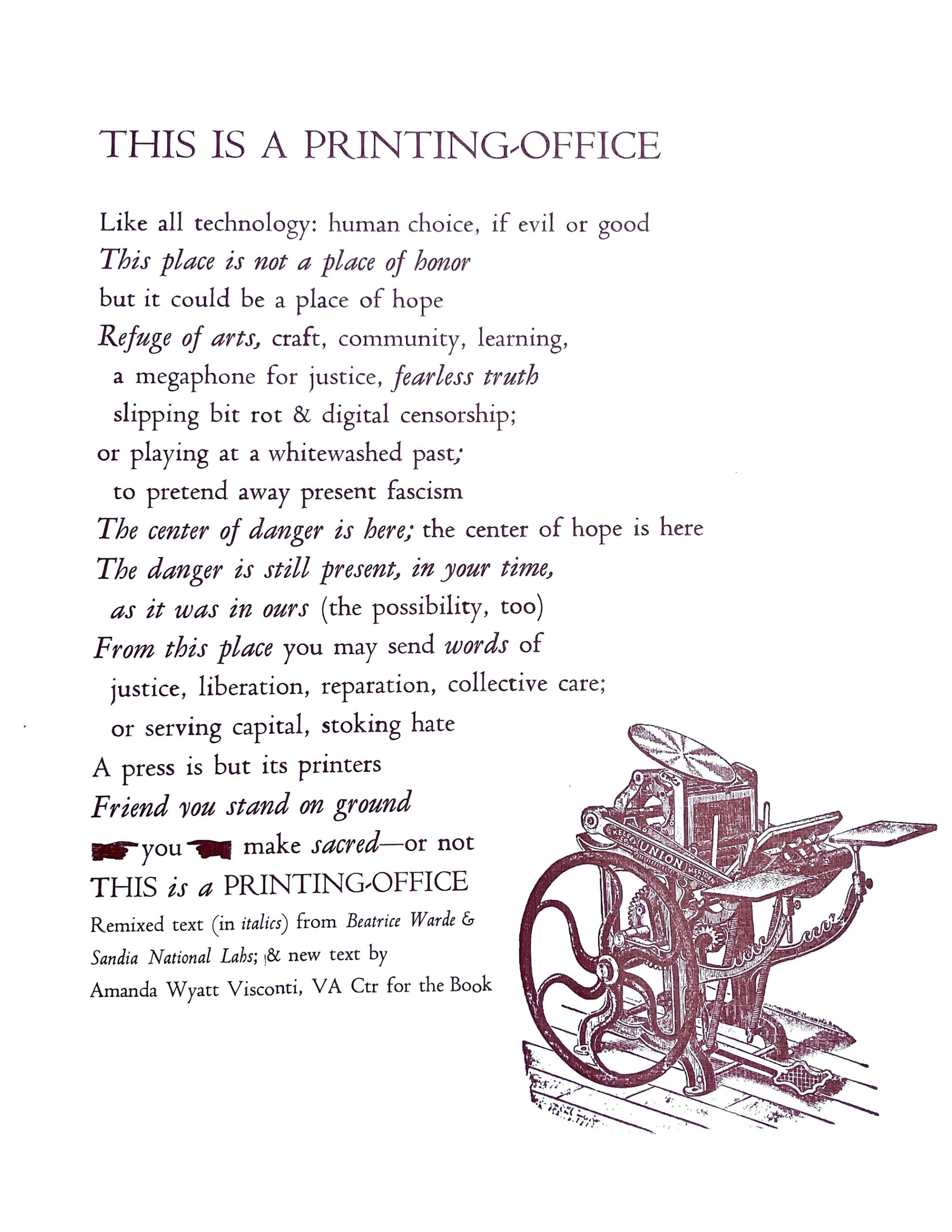
Ever-accelerating creation of digital technologies urgently demands caution, care, and analysis—review, critique, whistleblowing, improvement—informed by humanities strengths (e.g. history of non-digital technologies, ethics, narratology) as well as library and information expertise (e.g. systems evaluation, ethical data and catalogue design, archival accessibility) and creative practice (e.g. book arts, critical makerspaces). Simultaneously, emerging technologies—and the possibilities for refocusing on the often-social solutions excitement about tech can forget—offer opportunities for creating better futures.
We need practitioners working across tech and cultural fields to recognize opportunities to proactively dream, build, and assess our own interventions. To productively unite minds across the intersections of technology, information, and culture, we need just and joyful communities of interdisciplinary practice. Designing, building, analyzing, and sustaining such just and joyful knowledge communities is the heart of my research.
Universities teaching my work
My scholarship has recently appeared on syllabi including at University of Pennsylvania, Stanford, Princeton University, Dartmouth College, Northeastern University NULab, Washington State University, the Catholic University of America, University of North Carolina, Northwestern University, University of Maryland, and the Pratt Institute.
Current research activity
- Ongoing scholarship:
- Director of the internationally recognized Scholars’ Lab public digital humanities research center
- Secretary, Association for Computers & the Humanities (the U.S.-based, international-membership digital humanities scholarly org)
- Digital Humanities Slack founder and manager (10 years, 3k+ members!)
- Recent work highlights:
- Penland School of Craft Artist in Residence, January 2026; Ox-Bow School of Art Longform Artist Residency, August 2026; Kala Art Institute Artist Residency, 2026. 5 arts scholarships & fellowships (Penland, Ox-Bow; 2025-2026).
- Recent peer-reviewed scholarly essays on: speculative+generative peer review & digital humanities; reframing AI for the digital humanities; craft, DH, and feminist scholarly practice (forthcoming Summer 2026).
- 8 free zines published 2025-26; plus a news series of 4 zines (148 pages!) that’ve completed academic journal peer review (!; forthcoming Fall 2026)
- Co-author, mini-conference at the annual international DH2024 conference.
- Organizer, #DHMakes Methodz Talks public maker methods virtual talk series (2024-2026)
- Recent talks: physical art & craft for joy & digital humanities scholarship; digital book arts & experimental letterpress for social justice, accessibility, & joy; future of DH centers; scholarly social media; makers for multilingual letterpress; innovative DH grad education; speculative design & joyful peer review; book-adjacent data science & making; digital book arts investigations; zines+global DH…
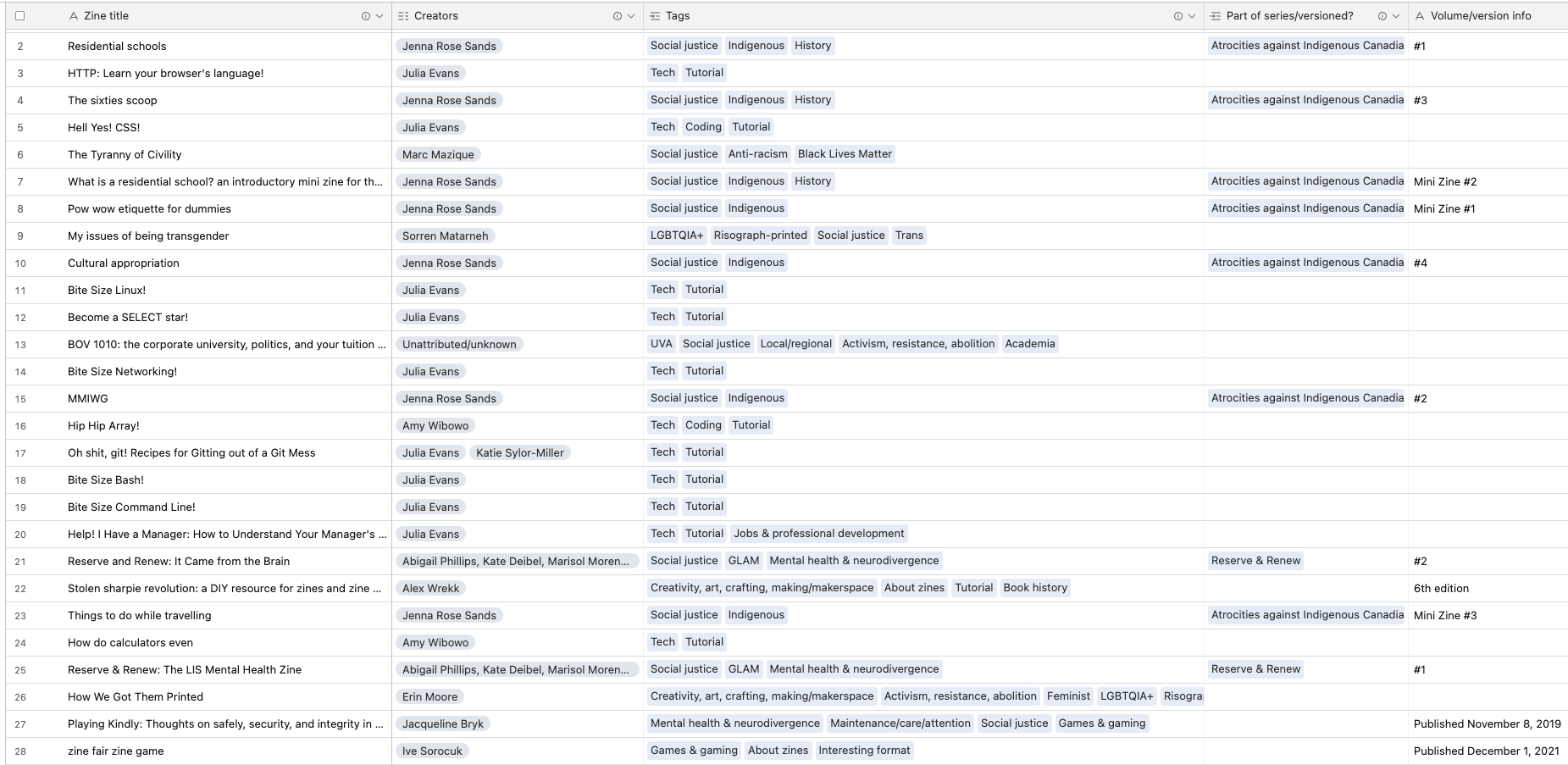
- Zine Bakery (zinebakery.com) data viz, relational database-based zine catalogue, data/coding/making research related to zines at the intersections of culture, tech, justice
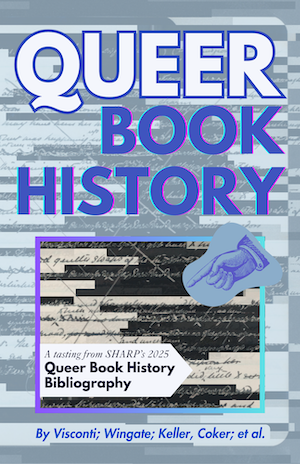
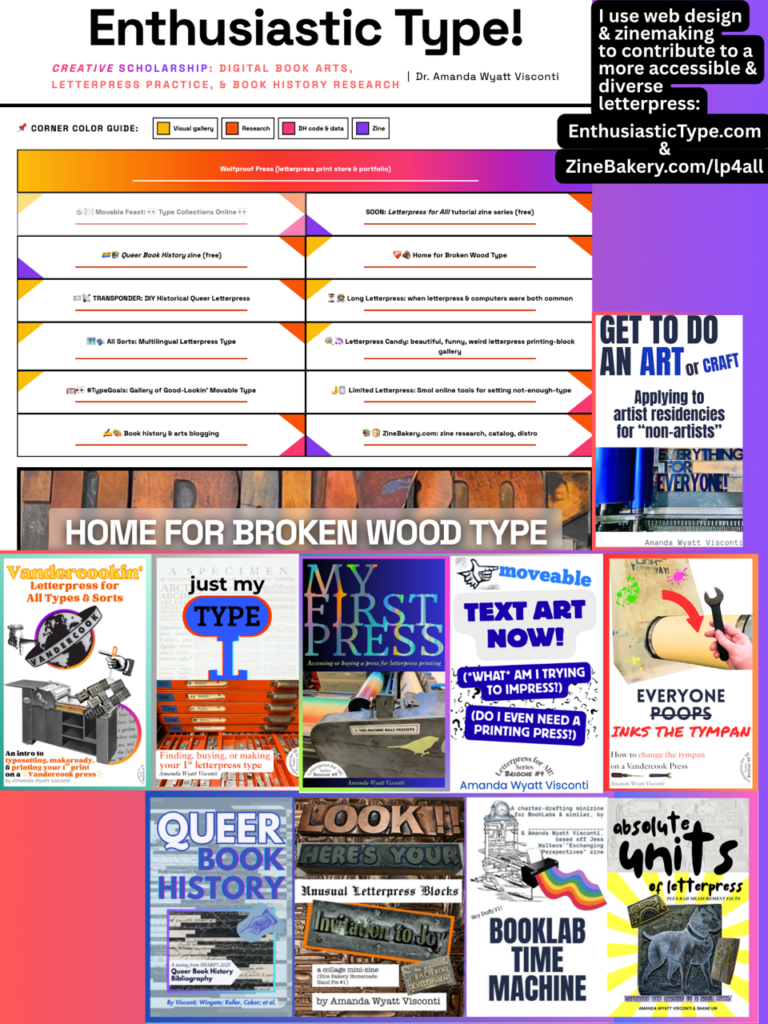
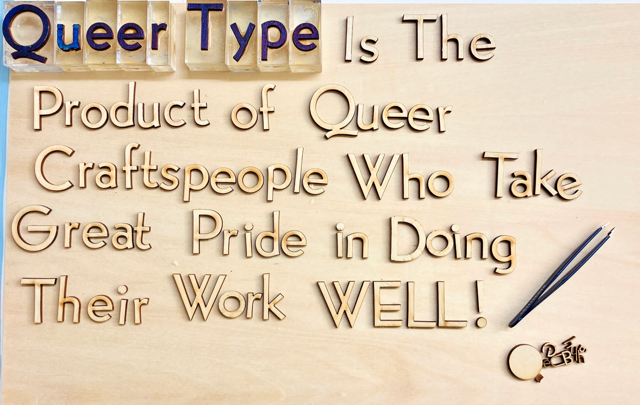
- Studying transfeminist book history & textual scholarship via zine curation, book-adjacent data science, and bookish makerspace work
- Exploring queer DH via a trans data analysis, co-building a trans DH syllabus
- Prolific, creative forms of radically transparent scholarly communication
- I frequently blog my scholarship at LiteratureGeek.com, an award-winning scholarly output (e.g. highlighted 22 times on Digital Humanities Now).
- I actively engage in scholarly social media on Bluesky (9.7k followers) & maintain a popular Bluesky for Academics guide.
Scholarly education
Literature Ph.D.
University of Maryland, Department of English (September 2010-May 2015)
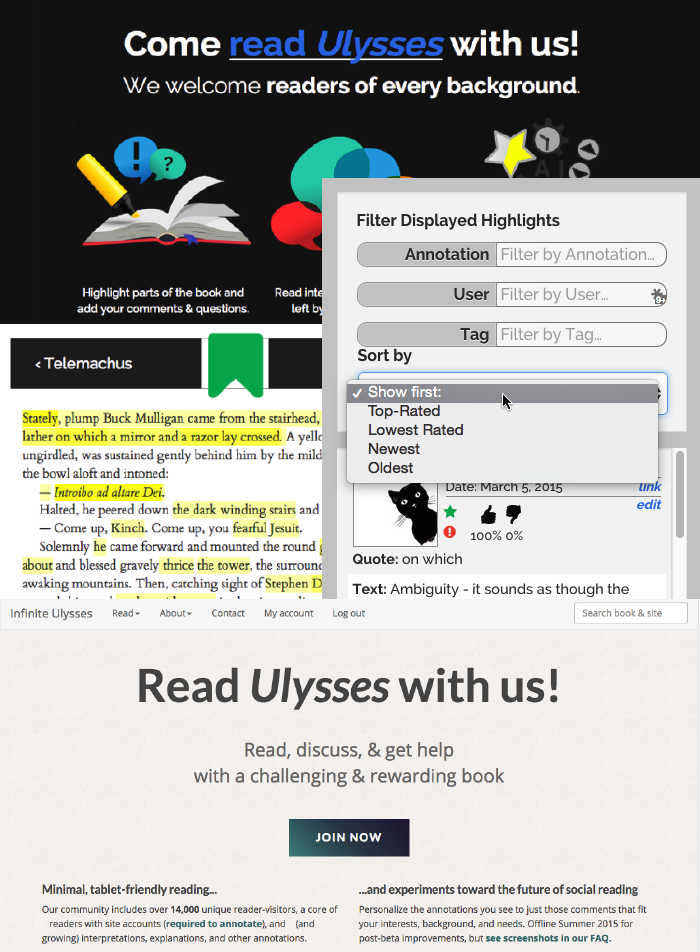
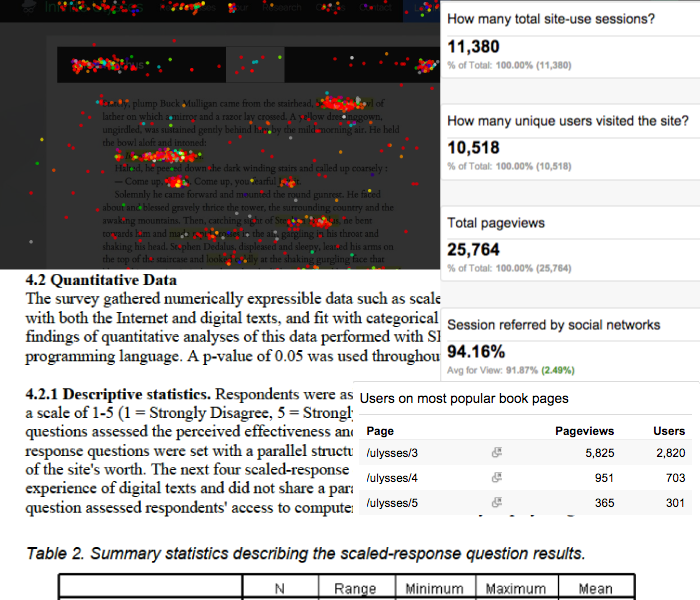
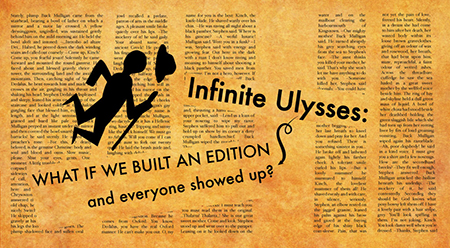
First Fully DH Literature Dissertation: Infinite Ulysses
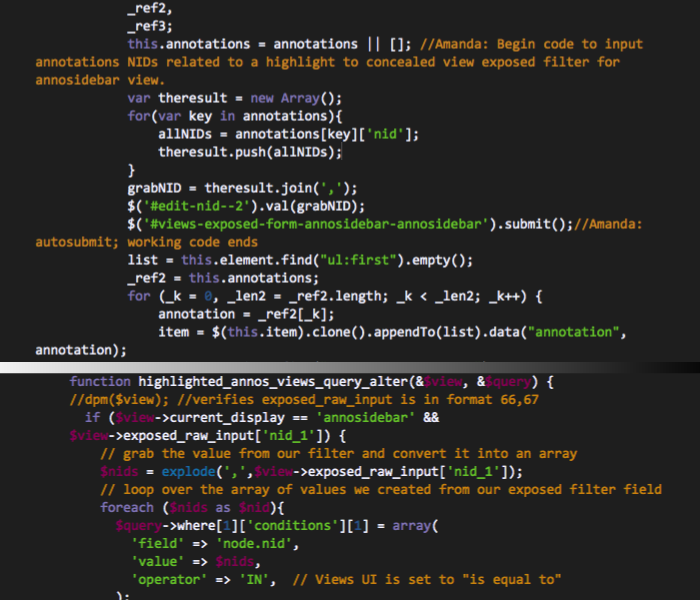
Successfully argued for, designed, and defended a unique literature dissertation with zero written chapters—the first fully digital humanities dissertation in an English Department, and (at least one of) the first full DH dissertations period. I achieved scholarly design, code, usertesting, and blogging around my Infinite Ulysses social reading platform, evaluated as the full critical work they were, not balanced/apologized for with written chapters.
This project showcased my strong project design and management skills: getting buy-in across my university, completing a unique project in the minimum possible time, parlaying an extremely non-traditional project into a tenure-track professorship. I blogged my design research and technical challenges twice monthly, and authored a whitepaper discussing design process and product during the month before its defense.
Information M.S.
University of Michigan, School of Information (September 2008-April 2010)
M.S. Specialization: Digital Humanities Human-Computer Interaction
I’ve been thinking and doing human-computer interaction for over 15 years. I’m trained in HCI (human-computer interaction) and information science via a master’s degree from the University of Michigan School of Information, where I designed, ran, and analyzed a formal user study looking at what small design changes to scholarly archives and digital editions would open these interfaces to public audiences.
“Amanda Visconti’s digital dissertation, Infinite Ulysses, is another compelling example of the power of born-digital work. Combining deep literary insight with interface design, web development, community building, and best practices in user testing and analytics, Visconti has created a space for collaborative interpretation of a text. Since its launch, hundreds of readers have annotated James Joyce’s text. Further, Visconti has provided an invaluable service to the community by blogging every stage of her research, development, and defense, helping to make transparent the hurdles that other emerging scholars might anticipate when working on digital projects.”
– Katina Rogers, Council of Graduate Schools report (2015; emphasis added)